
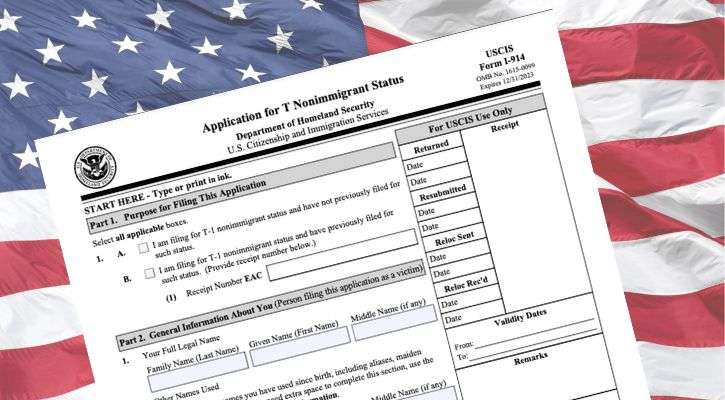
Human trafficking is one of the most serious—and at the same time most hidden—violations of human rights. Every year, thousands of people are forced into labor, labor exploitation, or sexual exploitation through threats, deception, or abuse of power. Many of these victims are in the United States without secure immigration status, which increases their vulnerability and fear of reporting the crime. To provide protection and a legal path to stability, the U.S. government created the T visa, a key immigration resource for survivors of human trafficking.
This article explains in depth what the T visa is, who can apply, what its benefits are, how the application process works, and how it can become a pathway to permanent residence.
What Is the T Visa?
The T visa is an immigration status specifically designed for individuals who have been victims of human trafficking and are present in the United States as a direct result of that crime. It was created as part of the Trafficking Victims Protection Act (TVPA) to protect victims, encourage cooperation with law enforcement, and prevent deportation.
This type of visa recognizes that trafficking victims often act under coercion, threats, or violence, and that punishing them with deportation only perpetuates the harm. The T visa offers a legal alternative that prioritizes the safety, recovery, and stability of the affected individual.
Requirements to Obtain the T Visa
In general terms, USCIS requires the applicant to demonstrate the following:
- Having been a victim of a severe form of human trafficking, including sex trafficking or forced labor.
- Being physically present in the United States, American Samoa, or at a port of entry as a direct or indirect result of the trafficking.
- Having reasonably cooperated with law enforcement in the investigation or prosecution of the crime, unless the victim is a minor or is unable to cooperate due to physical or psychological trauma.
Main Benefits of the T Visa
The benefits of the T visa go far beyond avoiding deportation. This status provides a solid foundation for victims to rebuild their lives.
One of the most important benefits is work authorization, which allows the individual to obtain lawful employment and achieve economic independence. In addition, the T visa protects from deportation while the status remains valid.
Another key benefit is the ability to include certain qualifying family members, such as spouses, children, parents, or minor siblings, depending on the age of the principal applicant. This is essential to ensuring the safety of the family unit.
Additionally, T visa holders may be eligible for certain public benefits and victim support services, making it easier to access medical care, psychological assistance, and recovery programs.
How to Apply Step by Step
Applying for the T visa is a complex process that requires careful preparation and strong documentation. The first step is gathering evidence that demonstrates the trafficking situation, such as personal statements, police reports, medical records, psychological evaluations, or statements from support organizations.
Next, the appropriate form must be filed with USCIS, along with supporting documents and sworn statements that explain the victim’s experience in detail. Although it is not always mandatory, having a certification from a law enforcement agency can significantly strengthen the case.
It is essential to present a clear and coherent narrative showing how the trafficking occurred, the harm suffered, and why the applicant meets all legal requirements. Given the level of detail and sensitivity involved, legal representation is highly recommended.
Differences Between the T Visa and the U Visa
Although they are often confused, the T visa and the U visa are not the same. Both protect victims of crimes, but they are designed for different situations.
The T visa focuses exclusively on victims of human trafficking, whether labor-related or sexual. In contrast, the U visa covers a broader list of serious crimes, such as domestic violence, sexual assault, kidnapping, or extortion.
Another important difference is that the T visa does not always require a mandatory law enforcement certification, while the U visa does require certified cooperation with authorities. Additionally, eligibility criteria and available benefits may vary depending on the type of visa.
How to Convert the T Visa Into Permanent Residence
One of the most important aspects of the T visa is that it can become a pathway to permanent residence. After maintaining T visa status for at least three years—or once the investigation or court proceedings are completed—the holder may apply for a Green Card.
To do so, the applicant must demonstrate good moral character, continuous physical presence in the United States, and compliance with the requirements established by law. This step represents a crucial opportunity to obtain long-term stability and build a secure future in the country.
Conclusion
The T visa is a powerful legal tool that recognizes the suffering of human trafficking victims and offers them protection, dignity, and a new opportunity. Understanding the requirements, benefits, and application process is essential to making informed and safe decisions.
Consult with an immigration attorney to learn about your options under the T Visa and receive the legal support needed to protect your rights and your future.